This is the group where games start turning into real technique. Kids at this age learn core positions and escapes, and they practice sticking with a challenge when it gets hard.
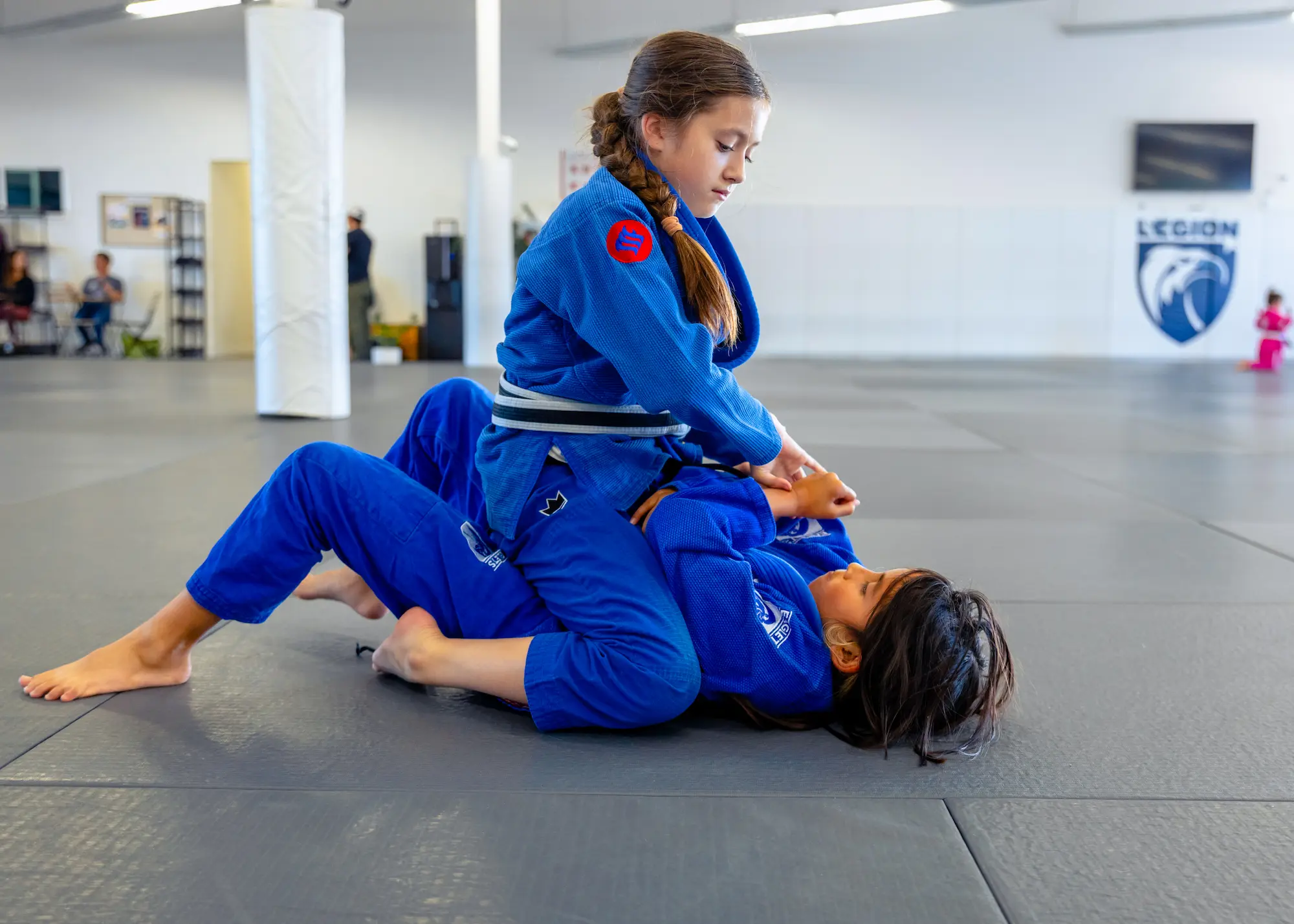
Around seven, most kids can hold their attention longer and handle more detail. That makes it a good age to move from mostly games into real jiu-jitsu technique. Kids in the 7 to 9 group start learning the core positions of the sport and how to escape from the bad ones, and they get more time working with a partner.
Discipline is a big part of this stage. We expect kids to listen when a coach is talking and to treat every partner with respect. Those expectations stay clear and consistent, and they are what let class run safely once kids start doing more with each other on the mats.
Our promotion guide places yellow belts starting around age 7. At that level, kids are encouraged to take more initiative during drills and sparring and to start making their own decisions on the mat. Each child moves through the belts on their own timeline, and the class is built with that kind of growth in mind.
Kids learn the main positions in jiu-jitsu and what to do in each one, which gives them a map for everything they learn later.
Getting out of a bad spot is one of the most useful skills a kid can have, and escapes get steady practice in this group.
Drilling with a partner teaches kids to control their strength and pay attention to the person they are working with.
Some techniques take many tries. Kids practice staying calm and trying again when a move does not work the first time.
Classes follow a clear structure so kids know what is coming next. The pace is quicker than in the youngest group, and coaches spend more time on the details of each technique.
Class opens with dynamic warm-ups made from jiu-jitsu movements. Kids get loose and sharpen their basics before any new material.
A coach demonstrates a position or an escape and breaks it into small pieces. Kids drill it with a partner until the pieces start to connect.
Kids try the technique in controlled practice with a partner, and coaches watch closely to keep everyone safe.
Each week puts one virtue in focus. Kids who show it can earn a pillar stripe, so good behavior gets noticed the same way good technique does.
Anti-bullying skills are part of the kids curriculum at every level. For this age group that means learning to use words first, and learning how to protect themselves and others without making a situation worse.
Kids in this range change a lot in a short time, and every child is different. Here is what the 7 to 9 program is designed to build during the first few months of steady training.
The program is designed to build confidence kids can take into the classroom and onto the playground, because it comes from skills they have actually practiced.
Working with different partners in every class is designed to teach kids how to cooperate and how to look after their teammates.
Learning a hard technique in small steps gives kids regular practice at staying with something that does not come easily.
White stripes are awarded mainly for attendance, with coaches also looking at ability and attitude. That gives kids a clear sign of progress between belts.
Our promotion guide notes that most kids spend about a year at each belt rank. Stripes are there to recognize the steady progress in between, and they can be given at the end of class or at our quarterly promotion events. The full breakdown is in the Kids Promotion Guide.
These are the current kids class times at Legion in San Diego.
| Day | Kids class times |
|---|---|
| Monday to Friday | 5:00 PM, main kids classes |
| Tuesday and Thursday | 4:00 PM, no-gi class |
| Sunday | 11:00 AM, ages 6 and up |
Every child in the 7 to 9 group is old enough for the Sunday 11:00 AM class, which is open to ages 6 and up. For help choosing the weekday classes that suit your child, call the front desk, and check the live schedule for the latest times.
The Tuesday and Thursday 4:00 PM class is no-gi. Ask us whether it is a good fit for your child when you come in for the intro, or call 858-888-1815.
Your first step is a free private intro. A coach works with your child one on one while you get a tour and a walk-through of how the program is set up. Your child can then try a real group class, and that trial can be on the same day.
The trial comes with three free uniform rentals, and when you sign up your child's uniform is free, so there is nothing to buy while they try it out.
Every child begins at white belt, including kids who start at seven or eight. Coaches break each technique into small steps, so a new student can follow along from the first class.
It is more structured. Games still have a place, and a bigger share of class goes to real technique and partner work, and coaches expect kids to listen and follow the class rules.
Yes. Anti-bullying training is part of the kids curriculum at every level. Kids learn to use words first and to protect themselves and others without escalating. Physical self-defense is taught as the option for when nothing else works.
Yes. The Sunday class at 11:00 AM is open to ages 6 and up, so every child in the 7 to 9 group can use it. It is a handy option for families with busy weekday afternoons.
For the trial we lend uniforms, with three free rentals included. Once enrolled, kids wear a clean gi to gi classes and a rash guard with shorts for no-gi, with nothing that has zippers or metal. Before class, tie back long hair and trim nails, and leave jewelry at home.
Legion is an approved vendor for programs that some San Diego families use to pay for activities: Pacific Coast Academy (PCA), San Diego Regional Center (SDRC) through Community Interface Services, and Literacy First Charter Schools. You can use those funds for your child's training here. If your child's charter school or program is not on that list, call us and we will look into it.
Go back to the main kids program page to meet our coaches and read parent reviews.
See the kids program → Toddler and Preschool, ages 4 to 6Our youngest group, where kids learn their first movements through games and short drills.
See toddler and preschool jiu-jitsu → Teen and Middle School, ages 10 to 14The oldest group, training gi and no-gi with live practice and scenario work.
See teen and middle school jiu-jitsu →Send us your details, pick an intro time that suits your family, and your child can meet a coach and try a class.
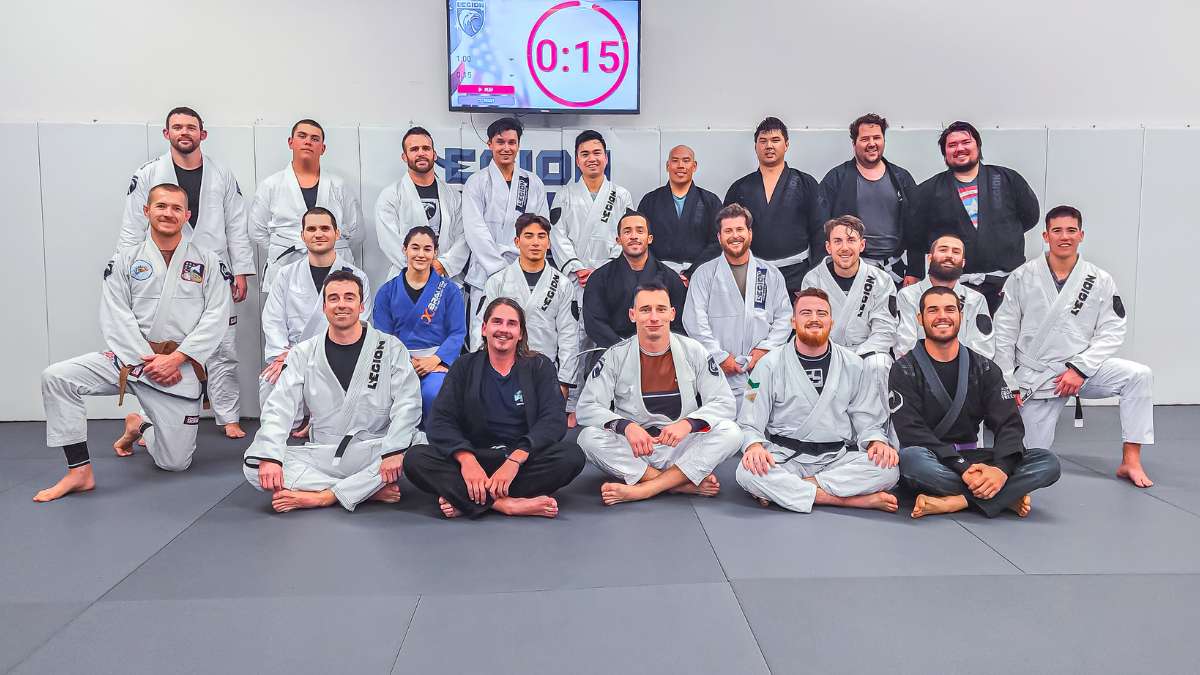
The Legion beginner path is objectively one of the biggest in the world, consisting of the 5-Week Beginner Course and the Funda...
Explore →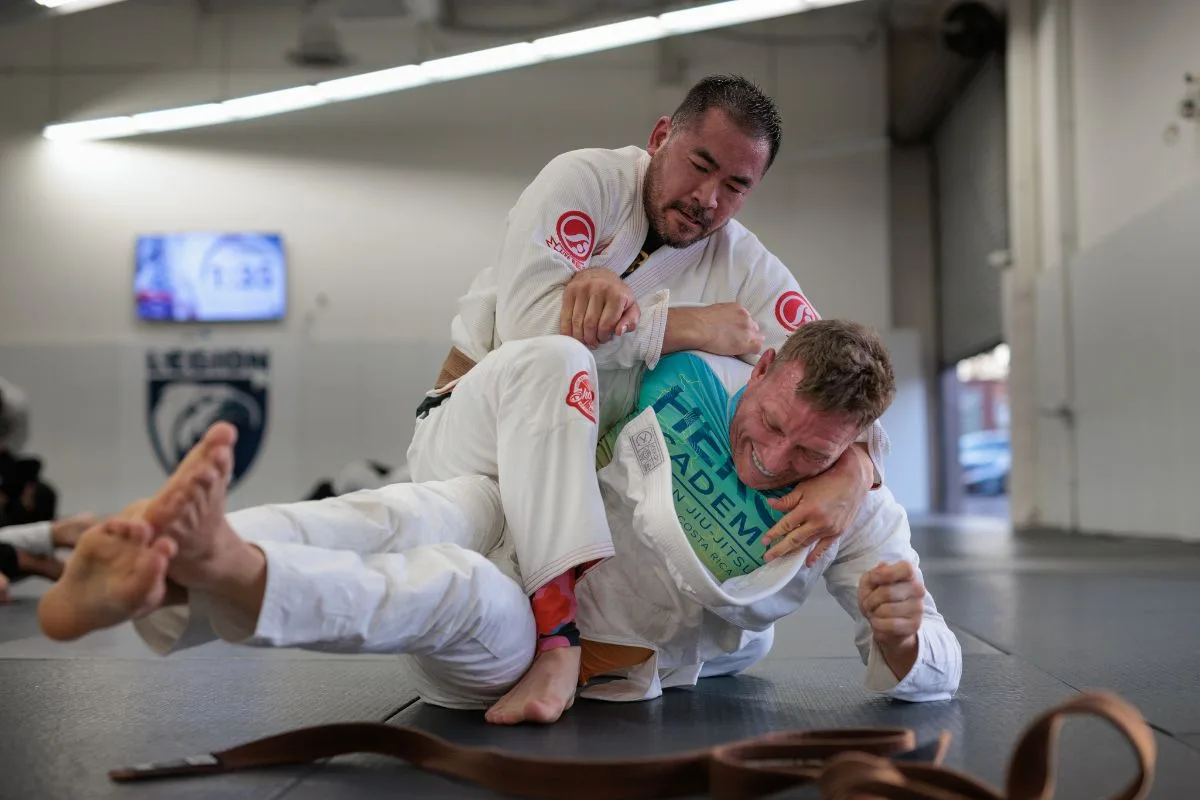
Find out more about our Intermediate-Advanced program, spanning gi and no-gi across various classes on our schedule from 6 AM t...
Explore →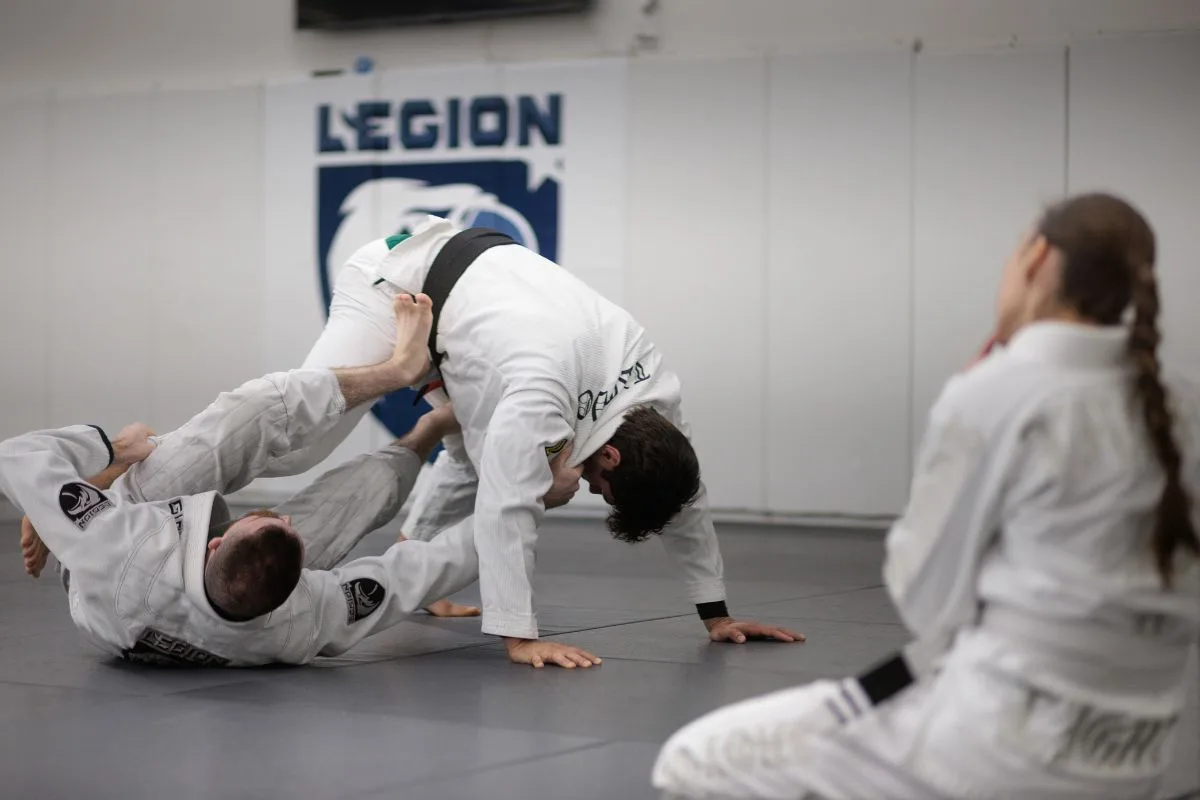
Some people prefer to take the private lesson route, and we have plenty of coaches to teach them. Tailored to your strengths, w...
Request a Private →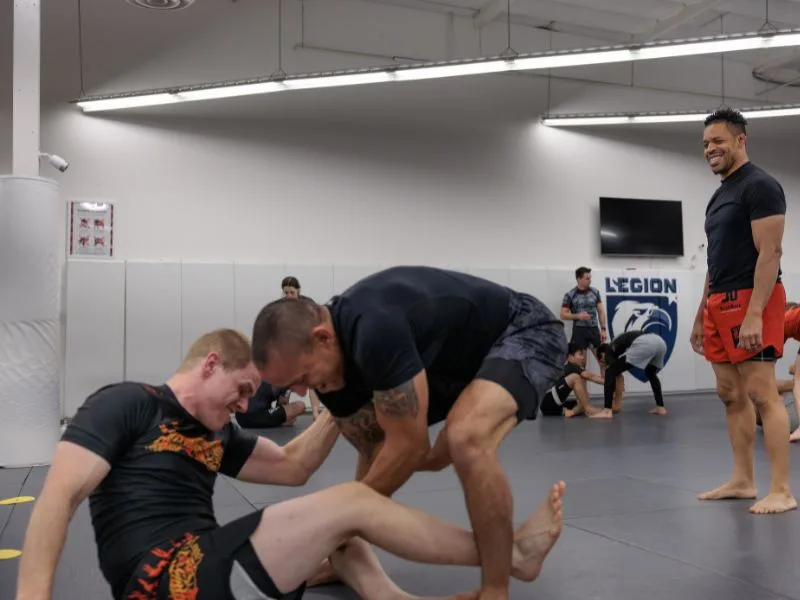
Jiu-jitsu without the gi. 17 no-gi classes a week, morning and night, from fundamentals to advanced, led by Sloan Clymer.
Explore →
Page coming soon.
Page coming soon.