
Dear Legion,
I’m sorry that this edition of the newsletter is a little late. You see, I’ve been busy getting stuck in the epicenter of the biggest controversy in jiu-jitsu in recent years. That hasn’t been super fun, and I’ve stayed out of the social media discourse, but I will let you know my exclusive take below. The main column this month is aboutfour tips on how to be a good training partner.
Kevin from the front desk also compiled two matches of the month, promotions, results from Master’s Worlds and more. But let's get started with some juicy controversy.
CJI 2 Judging Controversy
I judged CJI 1 last year, and I thought the razor-close final match for $1 million is the maximum level of stress that I can experience as a judge. I was very wrong.
In the lead-up to this year, I gained more experience from judging for the UFC, which “borrowed” the rule set. It also borrowed the lead official, which meant that there was a vacuum of responsibility for CJI 2. I offered to run the judge’s meetings, as we were doing a training camp for 2 months, getting together to judge and discuss matches to prepare. I ended up getting the title of head judge and also helped brief the referees and run meetings for the coaches and the athletes.
The judging was going very well on the first day. We were largely unanimous in our scores, even for the close matches. We punch the scores within 10 seconds of the round end, on a tablet, from our side of the pit, so all the decisions are made independently and immediately.
Then came the final. 2 of the 3 matches were easy to judge. Two of them were close to the margins of 10-9 versus 10-8. The Dorian Olivarez vs Ethan Crelinsten and Nicky Rod vs Luke Griffith matches. Not to go into too many details, but all the judges watched those again independently and scored them minute-by-minute, and we arrived back at the same scores. The last match tipped to 10-8 at the very end of it. Everyone’s hand was shaking putting the score in, but it was the correct judgement.
Since every one of the judges had the same score, this made the total scores 47-47, a draw. We got together at the judges' score tables and saw that we all scored it the same way, which triggered the tiebreaker - whoever won the last match, wins.
This is where it gets interesting. After the score was announced, it became clear that the rules document had two bullet points, the first one being very clumsily worded. Basically, it states that if there are five double eliminations, the team that wins more individual matches, wins. What it should say is that the team with the higher score total wins (for example 48-47). Bullet point two says that in the case of a draw on the scorecards, the team that wins the last match, wins. This typo caused a lot of controversy online, and it is embarrassing to be honest, but all the coaches were made aware of the actual tiebreaker in the rules meetings.
Afterwards, team New Wave was NOT happy. I ended up in a locker room with all of them, demanding to know why the rounds were scored like they were. I’ve seen hostage execution videos on the dark part of the internet that had better vibes than that room. I would honestly rather exclusively wear Gracie Barra merch for the rest of my life than be in that situation again. While all the calls were fair and correct, albeit close, there is no one articulate enough to explain that to five guys who just scrapped, a couple of pissed off dads and a coach who just lost to his former students.
After thirty minutes of enduring murderous glances and thinking about how long and how hard I’d hate someone if I thought they cost me a million dollars, I went to attempt to eat dinner and then attempt to sleep. 1/10 I don’t recommend the experience, but I hope you enjoyed the show!
Catch and release
As you rise through the ranks, you will inevitably get to the point where you are rolling with people who have a vast experience deficit compared to you. If you try to tap and control them with extreme efficiency, you end up in a roll that has a very uncomfortable rhythm. Tapping means resetting every time, with the slap and the bump that gives the victim some time to think about what an awful time they are having.
Unless you’re trying to prove a point or stroke your ego, that’s probably not good for you either, as you’re not getting much experience out of that kind of round.
That’s where catch and release comes into play. You can go for submissions instead of tapping the person leaving them to escape or allowing them to change positions. This leads to a much more fluid roll that can be better for both people. The less experienced person still gets to see where they went wrong but can continue and learn what would happen if they managed to escape. You get to practice more transitions and submissions and learn how to control the round.
Sometimes the other person won’t even recognize that it was game over and that’s fine, especially in a heel hook type situation where finding out can be quite sudden and painful.
Like a fisherman dropping a beautiful trout back into the lake, try to show mercy sometimes, hook the white belt on your metaphorical bait, pull them onto the boat, give them a kiss on the forehead, and drop them back in the water.
If someone gets choked out, don’t lift up their legs
Jiu-jitsu classes and competitions are some of the least alarming places to see someone pass out. The typical response is to lift their legs and shake them slightly until they wake up.
This practice has been around for ages but is based on broscience. The idea is that a strangled person experiences reduced blood supply to the brain, so elevating their legs supposedly helps gravity assist the heart in restoring circulation.
There’s just one problem—that’s not how strangles work. Strangulation affects two blood vessels: the common carotid artery and the internal jugular vein. The artery delivers oxygenated blood to the brain, while the vein carries blood away. Because veins constrict under pressure more easily than arteries, blood starts pooling in the brain first. As the pressure continues, the artery eventually stops delivering fresh oxygenated blood, worsening the situation.
Not only does lifting the legs fail to help, but it actually makes things worse. That’s why placing the person on their side in the recovery position is a better approach in the few seconds before they regain consciousness.
Do not rip submissions in training
There’s a discussion in the jiu-jitsu community about ripping submissions in competition. Ripping submission means applying them so quickly that the tap is not enough to stop the damage. Certain applications of kimuras, and heel hooks fall into this category.
Some people say that you shouldn’t rip submissions even in a competition because a “5 dollar medal isn’t worth it”, others accuse them of nerfing a combat sport. Personally I think it depends on the level of competition, at black belt, for example, everyone should be perfectly able to defend themselves and understand that you’re competing in a sport where it’s kill or be killed.
You know where it’s definitely not kill or be killed? At your local dojo in the round with Larry, the forty-year-old accountant, who got into jiu-jitsu two months ago to get healthier and be a good example for his three kids.
If you cannot apply a submission in a controlled fashion, without yanking it, you probably don’t understand it enough to be doing it in the first place. The true mark of a proficient fighter is being able to completely control the opponent while setting up the submission and while finishing it, even if there is a lot of movement involved.
Injuring a training partner feels bad, doing it in a negligent way feels extra bad and not ripping on submissions is a great way to avoid that guilt. If you’ve injured a training partner before by ripping on a submission recklessly and you didn’t feel guilty at all, please call your gym and terminate your membership, invest the savings into therapy.
Don’t do this to your friend… or your enemy
Honestly, stubbornness is a superpower in jiu-jitsu. All black belts are stubborn—otherwise, they wouldn’t be black belts. Many of us also genuinely enjoy channeling that stubbornness into a productive, problem-solving game. If you enjoy figuring out how to escape when someone’s trying to pop your head off your shoulders—and then finding a way to go on the offense—jiu-jitsu becomes quite a bit easier.
But stubbornness can turn toxic, especially when it comes to being caught in game-over submissions. Today we’re talking about training scenarios. Competition is a little different—things happen quickly, the margin for error is tiny, and there are real stakes.
Extreme stubbornness shows up in training too. A roll gets more competitive than usual—maybe you’ve already been tapped a few times in the round. Internally, you’re raging and determined not to let it happen again. Then you get caught in an ankle lock. Your training partner is giving you the “Bro, are you gonna tap?” look. But you ignore it. You grit your teeth and start grabbing his ankle to crank on it instead. Now he has no choice—he pulls, and your ankle pops.
A few minutes later, once you cool off and come down from that hyper-competitive mindset, you reflect. You realize not only are you out of training for a couple of weeks and limping for a few days—you made your friend hurt you. For what? Pride?
Refusing to tap out of that same stubbornness is even worse when it’s not your friend doing the damage. If it’s your enemy or rival, now you’ve gifted him the bragging rights of breaking you off—when it could’ve just been a sportsman’s agreement that you were caught and temporarily bested. From someone who’s been in all four roles—it’s not worth it. It’s best to just tap and swallow that pride.
Matches of the month
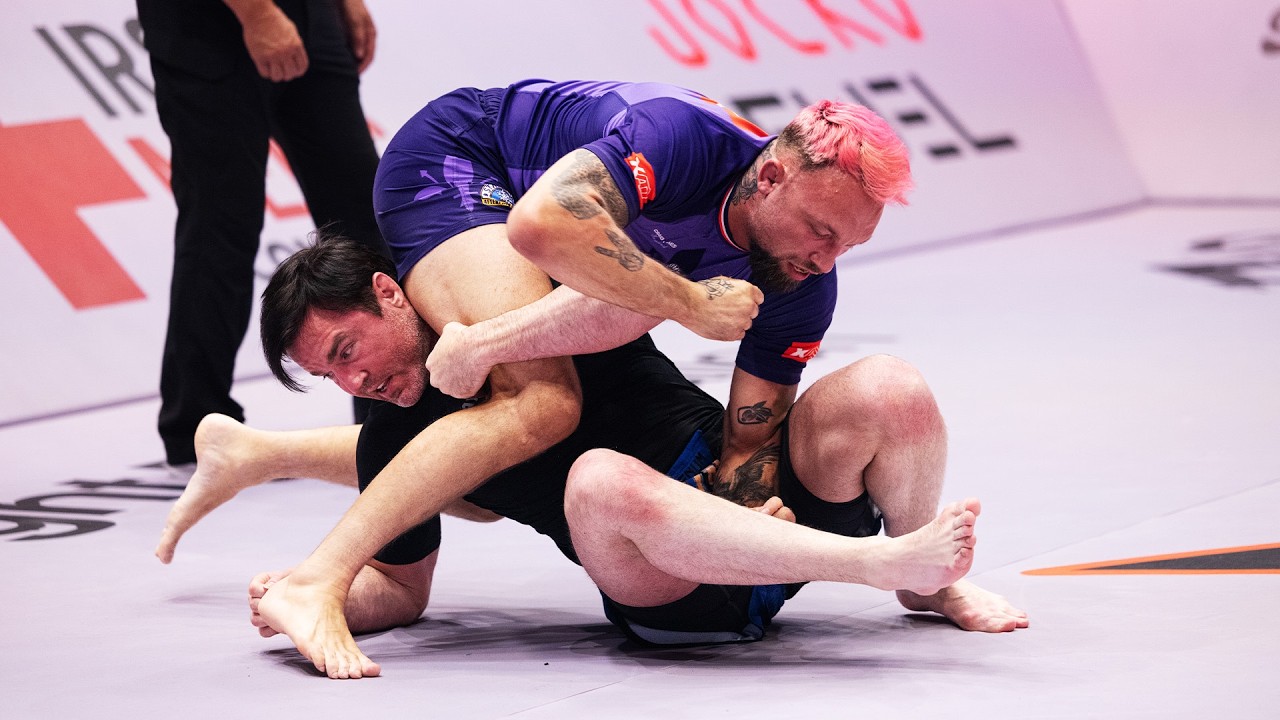
Chael Sonnen vs Craig Jones
And no big event is complete without a little spectacle—Craig Jones faced Chael Sonnen (who stepped in at the last minute for Gable Steveson), and in both rounds, locked in buggy chokes, one after another, putting Sonnen out cold twice.
If you missed the double tap out, check it out below.
(Some inside information - This match may look fake at first glance because of how much Craig embarrasses Chael. But the real reason for that is that Chael wanted and got $100k for this)
Dom Bell vs Nathan Mendelsohn
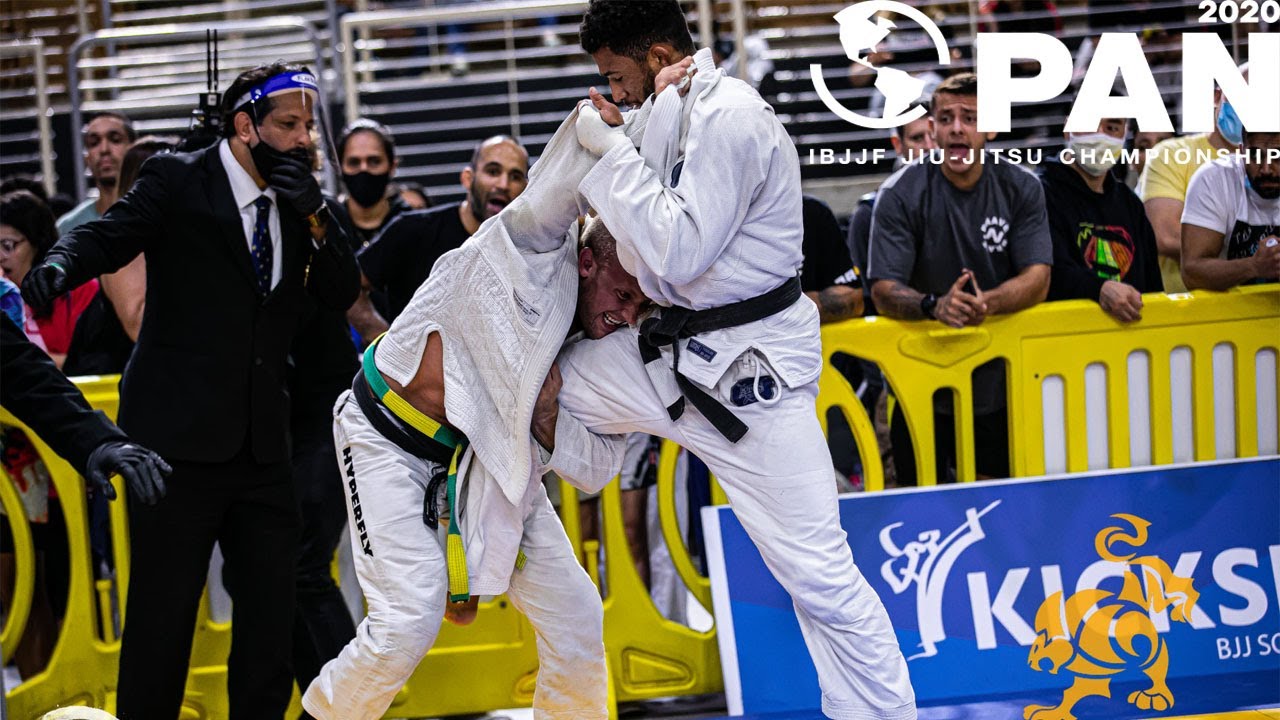
With Gi season taking some time off, let's head back in time and see how one of the coaches handled business.
Coach Dom Bell has been at Legion for some time now sharing his competition tested knowledge. Maybe he has sent you flying with an Uchi Mata (talking about myself here). But have you guys ever seen Dom compete? There’s plenty of footage of Dom using his go to tarantula guard or his flying knee cut pass. But I came across this absolute scrap he had back in 2020.
Belt Promotions
Congratulations to everyone who got promoted in August!
Brown Belt
Troy Royal
Purple Belt
Ryan Mocock
Blue Belt
Hirbod Samadi
July Top Attendees
🥇Jason Bunch - 27 classes
🥈Jimmy Wang - 26 classes
🥉Matthew Batease - 25 classes
Events
In House Tournament
Our next In House Tournament is fast approaching on September 13th! Whether you’re an active competitor looking to sharpen up or just want to simulate that real competition feel for your very first tournament, there’s no better way to get ready than right here at Legion HQ. If you’re considering doing the Jiu Jitsu World League in October, this is a great opportunity to prepare!
Want to do both Gi and No Gi? Use code BOTH when signing up. Don’t miss out—come get some matches in and test yourself!
Register Here
IBJJF Master Worlds Recap
Congratulations to everyone who competed!
While CJI 2 took all the spotlight, it was the same weekend as IBJJF Master Worlds and Legion pulled up to Las Vegas for it, returning with some hardware!
- Jacob Howenstein - silver🥈
- Brady Fukumoto - silver🥈
- Paul Passiales - bronze🥉
- Kristina Rogovoy - bronze🥉
Competitions
- NAGA - San Diego, Sept 13REGISTER
- IBJJF Pan No Gi Championship - New York, Oct 3-5REGISTER
- Jiu Jitsu World League - San Diego, Oct 10REGISTER
- IBJJF Orange County Open - Costa Mesa, Oct 25REGISTER
Outro
That does it for another edition of the newsletter.
P.S. Reminder, I missed four weeks of Judo for Jiu-Jitsu. Two because of Origin camp, one because of CJI and this last one because of the Jozef Chen seminar. However, the class is BACK this weekend, and I'm excited to see you there!